Validator#
click-repl uses Validator as its base class to implement its validator
(ClickValidator), to validate the user input.
It uses ClickValidator by default.
This utility displays the errors that are raised while generating auto-completions, in the form of text in bottom bar with a red background. It can also verify input text from the prompt while typing. The prompt will not accept input if the validator reports that it’s in an invalid format.
This is particularly useful for displaying formatted messages from UsageError exceptions using its
format_message() method.
Note
The validator can only catch and display exceptions that are raised while parsing the prompt. It cannot catch errors raised while generating suggestions.
 1import click
 2from click_repl import repl
 3
 4@click.group(invoke_without_command=True)
 5@click.pass_context
 6def main(ctx):
 7    repl(ctx)
 8
 9@main.command()
10@click.argument('num', type=int)
11def get_number(num):
12    print(num)
13
14
15main()
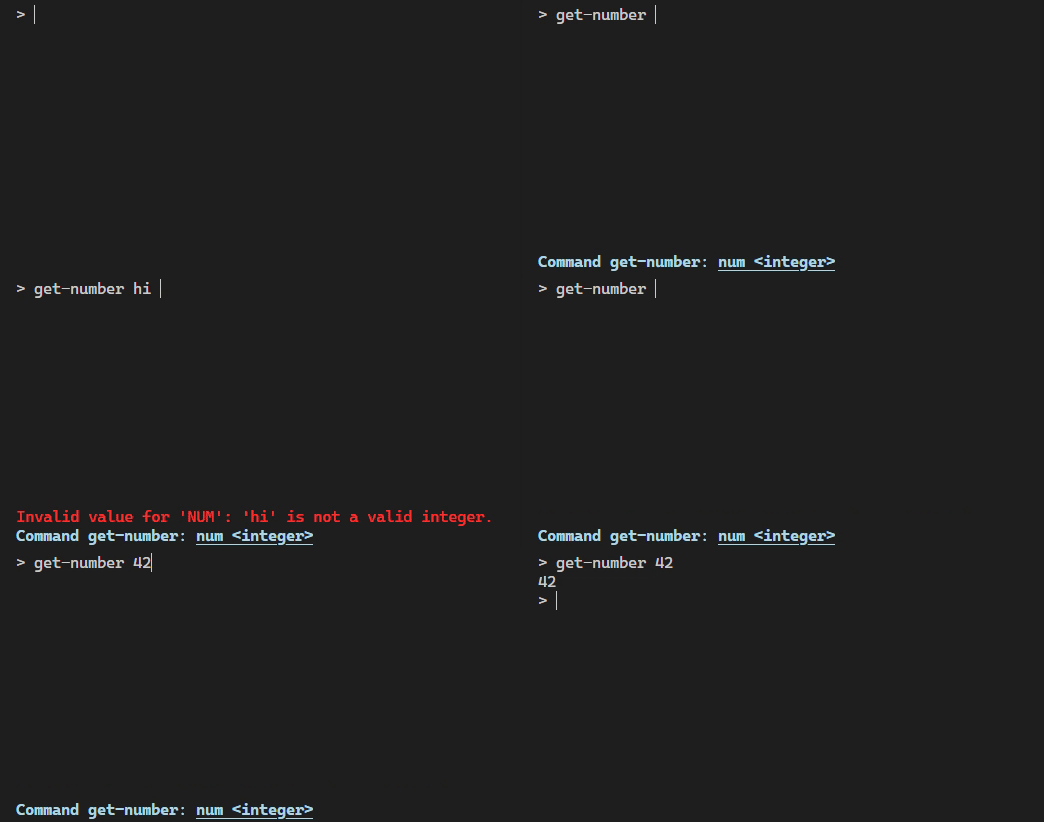
Custom Validator#
You can create your own valdiator class. To use it, pass it into the repl()
function’s validator_cls parameter. Simply passing the class will supply its constructor with
necessary values for its parameters.
Note
Ensure to use ClickValidator as the base class to make your custom validtor work with REPL.
 1import click
 2
 3from click_repl import repl
 4from click_repl.validator import ClickValidator
 5
 6
 7class MyValidator(ClickValidator):
 8    def validate(self, document):
 9        # Implement your logic for validating input text in the prompt.
10        ...
11
12@click.group(invoke_without_command=True)
13@click.pass_context
14def main(ctx):
15    repl(ctx, validator_cls=MyValidator)  # Now, it'll use the custom validator.
16
17
18main()
You can also disable validation by passing in None to the validator_cls parameter.
1@click.group(invoke_without_command=True)
2@click.pass_context
3def main(ctx):
4    repl(ctx, validator_cls=None)  # No validation is done during typing in prompt.
5
6
7main()
This disables the usage of the validator, meaning no validation of input is done while typing in the prompt.
validator_kwargs#
If you want to pass extra keyword arguments to the validator, you can do so through the validator_kwargs parameter
of repl() function.
 1@click.group(invoke_without_command=True)
 2@click.pass_context
 3def main(ctx):
 4    repl(ctx, validator_kwargs={
 5        # Your extra keyword arguments go here.
 6        'display_all_errors': False
 7    })
 8
 9
10main()
This dictionary of keyword arguments will be updated with the default keyword arguments of validator, which will be supplied
to the validator upon initializing the REPL. The default arguments for ClickValidator are:
internal_commands_system-InternalCommandSystemobject of the current REPL session.
These default values are supplied from the get_default_validator_kwargs() method.
Display all Errors#
By default, ClickValidator displays all the exceptions, that are raised while parsing the
text in the prompt while typing, in validator bar, including generic python exceptions.
To modify this default behaviour, set the display_all_errors parameter to
False in the validator kwargs. This flag determines whether to raise generic Python Exceptions
and not to display them in the validator bar, resulting in the full error traceback being
redirected to a log file.
By default it’s True, which means all errors raised while typing in prompt are
displayed in the validator bar. If set to False, error tracebacks are displayed during the REPL,
interrupting the prompt. The error traceback and messages are also logged into the .click-repl-validator.log file.
Note
The ClickValidator displays all the exceptions from the click module
(ClickException based exceptions) in the validator bar, by default. This flag has no effect on it.
It only applies to exceptions that are not a subclass of ClickException.
 1import click
 2from click_repl import repl
 3
 4@click.group(invoke_without_command=True)
 5@click.pass_context
 6def main(ctx):
 7    repl(ctx, validator_kwargs={
 8        'display_all_errors': False
 9    })
10
11def mock_error_during_shell_complete(ctx, param, incomplete):
12    raise ValueError("mocking error during shell complete")
13
14@main.command()
15@click.argument('num', type=int)
16@click.option('--error', shell_complete=mock_error_during_shell_complete)
17def get_number(num, error):
18    print(num)
19
20
21main()